Why Your 9 PM “Quick Check” is Killing Your Productivity & Well Being
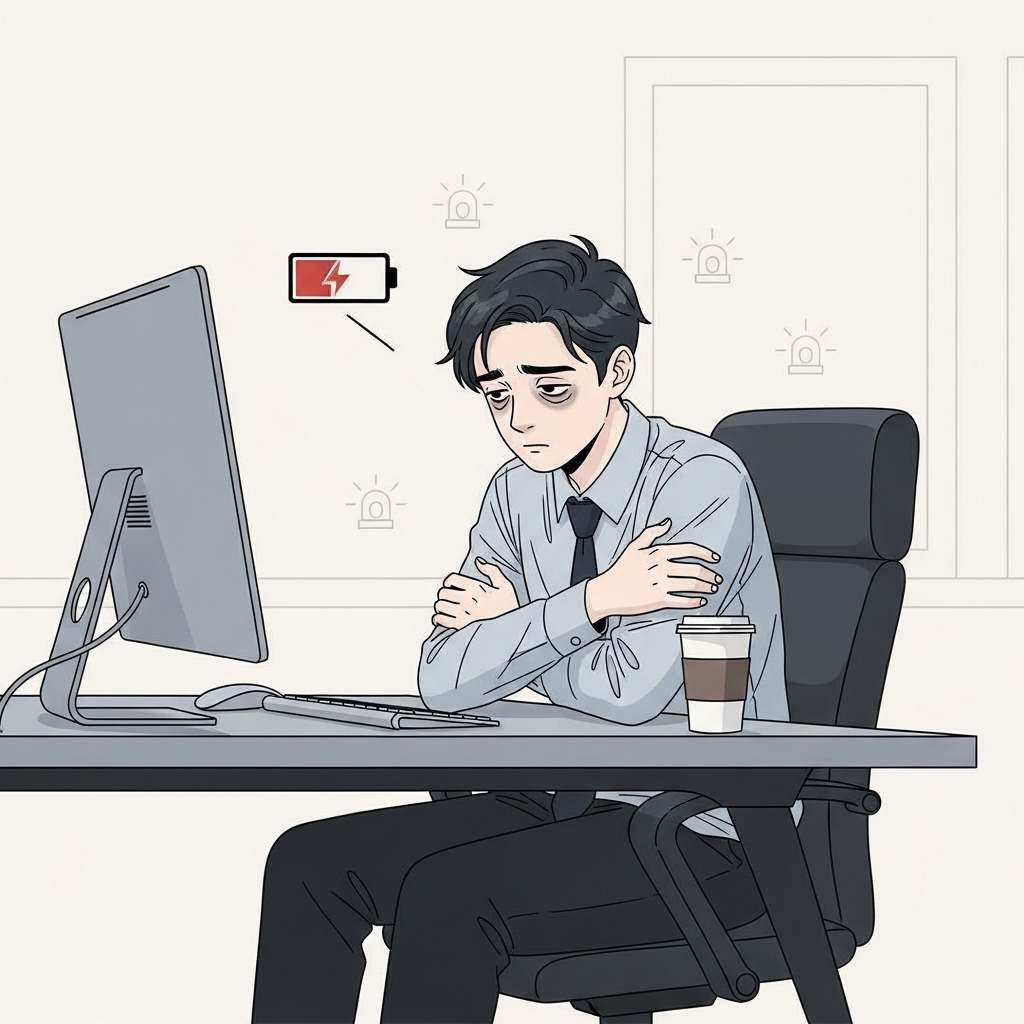
If you work from home, you know the feeling. You are sitting on your couch trying to watch a movie, but your brain is still back at your desk. You’re replaying a conversation with your boss or worrying about a deadline.
The physical office might be closed, but your “mental office” is wide open.
You are not alone. Millennials and Gen Z are reporting higher levels of burnout than any other age group. Since remote work became common, after-hours messages have gone up by 42%. Your laptop is three feet from your bed, and it feels like the workday never ends.
Here is the reality: You are overwhelmed.
I worked for the past 35 years as a senior HR executive and 20 years as a behavioral coach. For a significant part of my career, I worked remote with teams demanding my attention across different global time zones. From my own experience and observing others, I can tell you that the most successful people aren’t the ones who work 24/7. They are the ones who know how to shut it down.
Here is how to stop using willpower and start using brain science to reclaim your evenings.
Why do I feel guilty when I’m not working? (The Brain Science)
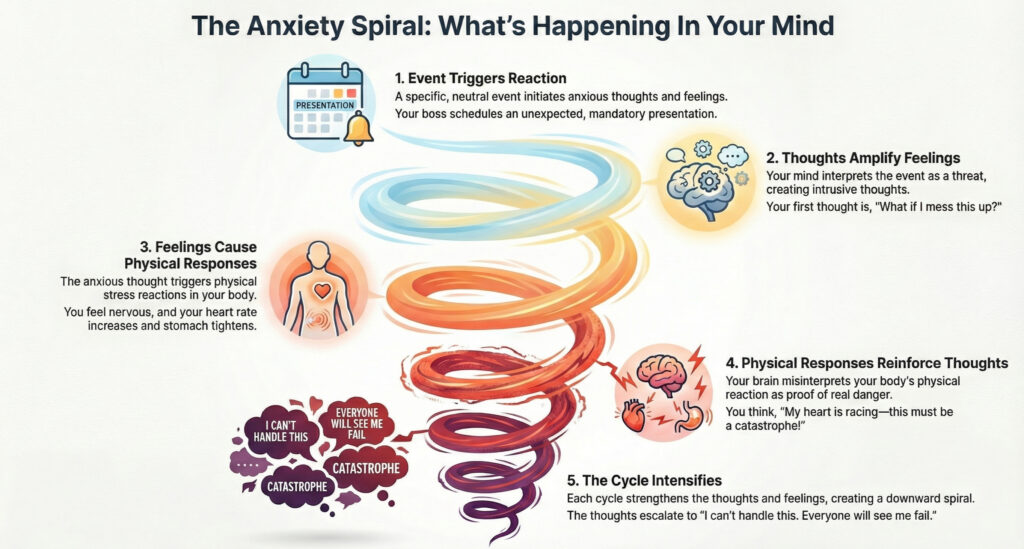
The Problem: You finish work, but you feel anxious. You feel like you should be checking email, or you worry that you forgot something. This is because your brain is confused.
The Solution: You need to fix “Location Confusion,” “Open Loops,” and “Digital Threat Triggers.” We will cover each in the sections below.
The Evidence: Your brain uses your environment to know how to act.
- Old Way: The office meant “work.” The commute meant “transition.” Home meant “relax.”
- New Way: When your bedroom is also your office, your brain never gets the signal to relax.
There is also something called the Zeigarnik Effect. This is a fancy way of saying your brain remembers unfinished tasks better than finished ones. If you have an unanswered Slack message, your brain keeps it open in the background, draining your battery like an app you forgot to close.
Finally, there is the Notification Threat Loop. In the modern workplace, constant app notifications act as “threat triggers.” Every ping tells your nervous system there is a potential danger to handle. This keeps you in a state of hyper-vigilance, keeping stress hormones elevated even while you are trying to sleep.
Short on time? Watch this short YouTube video of this topic before you dive into the details below.
How do I stop worrying about work at night?
The Problem: You try to relax, but thoughts about tomorrow’s to-do list keep popping up, ruining your dinner or your sleep.
The Solution: Use “The Mental File Cabinet” technique. You cannot just tell your brain to “stop thinking.” You have to give it a task to do instead.
How to do it (The 5-Minute Fix):
- Write it down: Before you close your laptop, write down every worry or task on your mind.
- File it: Sort them into lists like “Do Tomorrow,” “Waiting on Reply,” or “Worry List.”
- Visualize: Close your eyes. Imagine putting those lists into a file cabinet and locking the drawer.
- Speak it: Say this out loud: “This information is stored. It will be there tomorrow at 9 AM. I have permission to relax.”
This tricks your brain into feeling safe so it can let go.
How can I separate work from life in a small apartment?
The Problem: You don’t have a separate home office. You work at the kitchen table or in your bedroom, so you never feel like you’ve “left” work.
The Solution: Use “Context Zoning” and “Sensory Cues” to create fake boundaries.
Action Steps:
- The “Work Only” Chair: Pick one spot. Work only happens there. Do not eat there. Do not scroll Instagram there. When you stand up, work is over.
- Change the Lighting: Turn on a specific bright lamp when working. Turn it off the second you finish.
- Dress the Part: Wear shoes or a blazer while working. Take them off when you clock out. This signals to your body that “work mode” is done.
- Create Digital Friction: Willpower runs out, so make it hard to cheat. Log out of Slack at 6 PM or put your laptop in a drawer. If you can’t hear the “ping,” your brain doesn’t have to fight the urge to check it.
How do I calm down my anxiety after a stressful day?
The Problem: Even after you close your laptop, your heart is racing and your shoulders are tight. Your body is stuck in “fight or flight” mode.
The Solution: Use the “Cognitive Shutdown Sequence” to physically switch your nervous system off.
The 3-Minute Routine:
- The STOP Signal: Stand up and say “STOP” out loud. Look at three things in your room. This pulls you out of your head and into the room.
- Square Breathing: Breathe in for 4 seconds, hold for 4, breathe out for 4, hold for 4. Do this three times. This lowers your heart rate immediately.
- The NOW Declaration: Look at the empty space where you were working and say: “NOW, work is complete. NOW, my mind is clear.”
Will taking breaks hurt my career?
The Problem: You worry that if you aren’t “always-on,” you will fall behind or look like you don’t care about your job.
The Solution: Reframing recovery as a business asset, not a luxury.
The Reality: Burned-out employees make mistakes. They are slower and less creative. In my career, I have seen that the people who get promoted are the ones who manage their energy, not just their time. They show up fresh and make better decisions.
Your mental health is part of your professional toolkit. Protect it.
Prefer to listen on the go? Tune into the Audio Deep Dive version of this article, where we discuss the behavioral nuances and hidden scripts that didn’t fit in the text.
Ready to Stop Being Overwhelmed?
The tips above are key to your awareness and the short exercises helpful in restoring your sanity immediately. However if you are interested in going from “exhausted” to “in control” or unplug from remote work completely, you may need an even more detailed plan.
Take the next step:
- Get Started Free: Download your complimentary Boundary Script Cheat Sheet – “5 word-for-word scripts to confidently handle tough work requests“(often a source of anxiety!) below.
- Get the Full Blueprint: My ebook, The Burnout Fix, includes detailed scripts for talking to your boss, a 14-Day Detachment Challenge, and a 30-Day Energy Rebuild plan. Grab your copy on Amazon below.
- Get Personal Coaching: Need help fixing the “always-on” culture in your team? I offer executive coaching and workshops. Visit ChangeForResults.com to learn more.
About the Author: Kaushik Nag spent more than 35 years as a Fortune 500 HR executive and a Behavioral Coach, coaching thousands of professionals and leaders through workplace challenges. His current work distills that experience into practical, brain-based strategies you can use immediately. Learn more at www.changeforresults.com
Connect with Kaushik on LinkedIn here.
For insightful articles on both individual and organizational change click here or visit his YouTube channel for short easily digestible behavioral tips you can use at the workplace.
Reach out below to request the complimentary “Boundary Script Cheat Sheet“